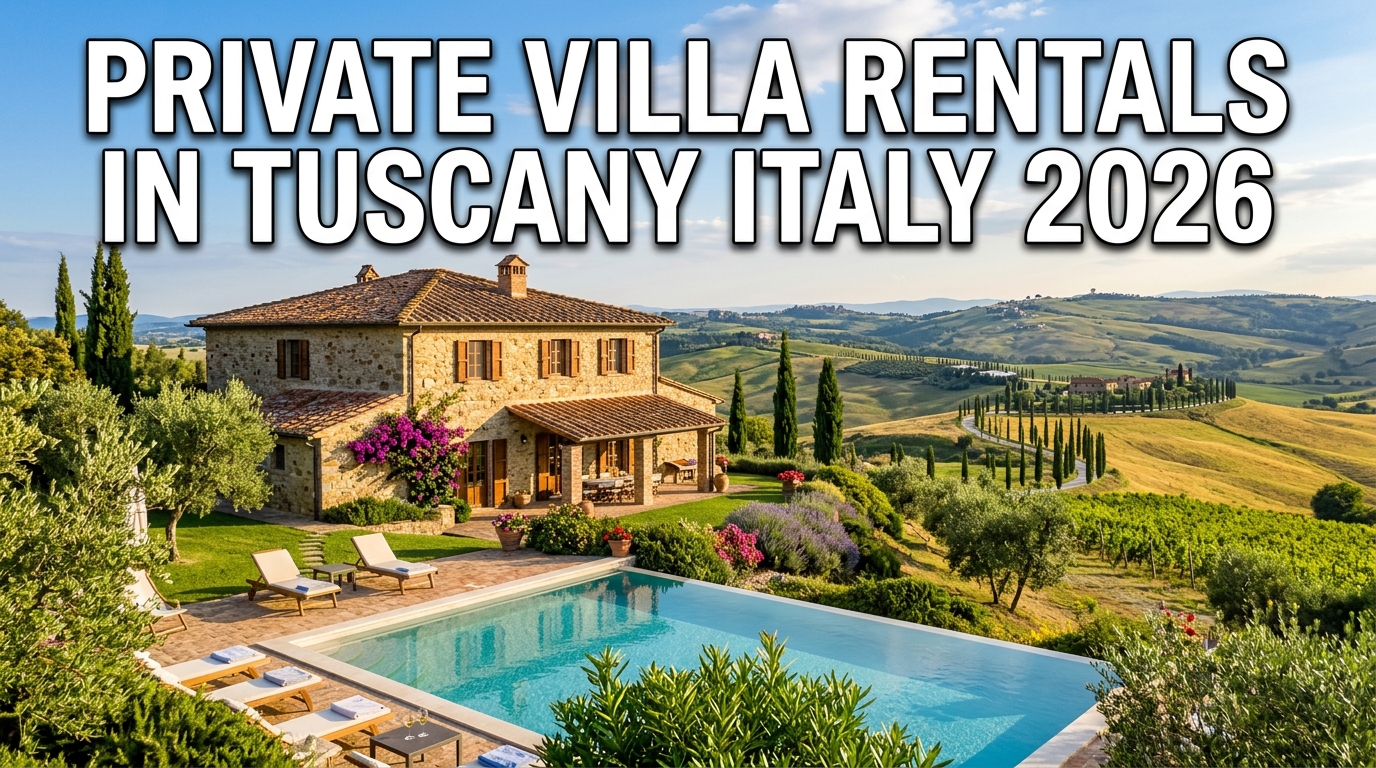
Private Villa Rentals In Tuscany Italy

What “Private Villa Rental” Actually Means
A private villa rental in Tuscany means you rent the entire property — no shared entrance, no other guests, no hotel reception. You get exclusive use of the house, the grounds, the pool, and (usually) parking. Minimum stays are typically 7 nights in peak season, and 3 to 5 nights in shoulder months.
That’s the clean definition. The important thing to verify is the word “private.” Some properties on general platforms list themselves as villas but operate more like agriturismo — a farm-stay category in Italian law where multiple guest units share common areas and pool access. If you want no other guests on the property at all, you need to ask that question directly before booking.
Also Read: Best Luxury Beach Resorts In The Maldives 2026
The Main Villa Types in Tuscany
Tuscany has its own vocabulary for property types. Knowing what these mean saves confusion:
- Casale / Podere — A restored stone farmhouse. Usually 3–8 bedrooms, original features like vaulted ceilings and terracotta floors. The most “classic Tuscany” option.
- Villa Colonica — A larger estate house, often with a separate guest cottage (dependance). Good for groups of 10–20.
- Borgo — A hamlet. Multiple restored stone buildings on one estate, each sleeping separately. Ideal for large family gatherings or wedding groups who want private rooms but shared grounds.
- Agriturismo with exclusive use — Some farm-stays offer full property buyout. Can be good value but confirm there are no other guest units in operation.
Where in Tuscany to Actually Stay
This is where most villa searches go wrong. People pick Tuscany as a destination, then choose a property based on photos without thinking about what the area is actually like to live in for a week.

Chianti
The strip between Florence and Siena. This is the region most people picture when they imagine Tuscany. Vine-covered hills, hilltop villages like Radda in Chianti and Greve in Chianti, Chianti Classico DOCG wine from every direction. The road through it (the SS222 Chiantigiana) gets busy, but the side roads are quiet. Most properties sit on white gravel strade bianche — unpaved roads that look stunning and are perfectly driveable in a normal car, just slower.
Best for: wine enthusiasts, couples, first-time Tuscany visitors, anyone who wants both Florence and Siena within 45 minutes.
Val d’Orcia
A UNESCO World Heritage Cultural Landscape. Those photographs of lone cypress trees on pale hilltops above rolling fields — that’s Val d’Orcia. Towns include Pienza, Montalcino (home of Brunello di Montalcino), and Bagno Vignoni with its ancient thermal pool piazza. It’s further from the main airports and slightly more isolated than Chianti.
Best for: honeymooners, photographers, Brunello wine collectors, people who genuinely want to slow down and stare at hills.

Florence Hills (Fiesole, Impruneta, Bagno a Ripoli)
Villas 20–30 minutes from the Uffizi, with countryside feel. Fiesole itself has Medici-era villas and views back over Florence. If you want to hit the city every second day, this is your zone. Pricier than most regions, but the location trade-off is real.
Lucca Area
Under-rated by most international visitors. Lucca has one of Italy’s best-preserved Renaissance city walls (you can walk or cycle the top). Pisa airport is 30 minutes away — the easiest arrival experience of any Tuscan region. Some grand old palazzi here have been converted into rental villas with genuine grandeur and lower prices than equivalent Chianti properties.
Maremma
Tuscany’s coastal stretch, running south from Grosseto toward Monte Argentario. Beach access plus Tuscan countryside in the same trip. Growing in popularity, especially for families. Prices are lower than Chianti. One thing to check: Maremma beaches split between free public beaches and private lidos. Ask whether your villa has direct beach access or relies on nearby public spots.
| Region | Best For | Avg. Night (private villa) |
|---|---|---|
| Chianti | Wine, classic Tuscany feel | €450–€2,500 |
| Val d’Orcia | Scenery, honeymoon, Brunello | €500–€3,000+ |
| Florence Hills | City access, art lovers | €600–€4,000 |
| Lucca area | Airport ease, grand villas | €350–€2,000 |
| Maremma coast | Beach + countryside combo | €400–€2,200 |
| Crete Senesi | Solitude, off-beat landscape | €300–€1,800 |
Prices above are for the full property, not per person. A 6-bedroom Chianti casale at €900/night works out to €150 per person for a group of six — less than most Florence hotel rooms.
The Real Cost of Renting a Tuscany Villa
Listing prices rarely tell the full story. Here’s what actually gets added on top:
- Cleaning fee: €200–€800 per stay, charged once, not per night.
- Security deposit: €500–€5,000. Usually held rather than charged, but verify the return conditions in writing.
- Italian tourist tax: €1–€4 per person per night. Required by law and often listed as a separate line item.
- Pool heating surcharge: €200–€600 per week. Not included by default at most villas. More on this below.
- Utilities: Some winter rentals charge extra for heating. Worth confirming before you book.
- Agency or platform fee: 10–18% on top of the owner’s base rate, depending on the channel.
A legitimate agency or owner will give you a full cost breakdown before you pay anything. If they won’t commit to that in writing, that’s a reason to keep looking.

The Pool Heating Problem
This one catches people every year. Tuscany pools are not heated by default. In May and early June, water temperatures can sit at 17–19°C — cold enough that most people won’t swim. Same in September and October. If your trip is outside July and August, ask specifically whether pool heating is included, and what it costs. The surcharge is usually worth it.
Booking Channels: Agency vs Platform vs Direct
You have three real options, and each has a different risk profile.
Specialist Tuscany Villa Agencies
These companies physically inspect properties, vet owners, handle contracts, and have someone to call if something goes wrong. In the UK and Australia, agencies like Tuscany Now & More, Red Savannah, CV Villas, Parker Villas, and Sawday’s have been operating for 15–20 years with real track records. They charge more (that 10–18% fee comes from somewhere), but for a first Tuscany villa booking or a large group spend, the safety net is worth it.
OTA Platforms (Airbnb, VRBO, Booking.com)
Huge inventory. Airbnb Luxe has a growing Tuscany portfolio. VRBO (called HomeAway in some markets) is popular with American travelers. Reviews exist, prices are transparent, and cancellation policies are clear. The risk is quality control — there’s no one physically checking that the photos match reality. Read recent reviews carefully, specifically looking for comments on road conditions, pool state, and maintenance.
Direct from Owner
Can save 15–20%. Some owners have professional direct-booking sites. The problem is that if anything goes wrong — property doesn’t match the listing, owner cancels, dispute over deposit — you have less recourse. If you book direct, pay by credit card rather than bank transfer, keep every email, and make sure the owner can provide their Italian tourism registration number (the SCIA — Segnalazione Certificata di Inizio Attività). Legitimate owners have one. If they can’t provide it, don’t book.
When to Go, and How Far Ahead to Book
May and June are objectively the best months for most people. Temperatures are comfortable (18–27°C), wildflowers are out, wine estates are open without the tourist overload, and prices are 30–40% below August. September and October are equally good — harvest season, truffle hunting starting in October, amber light in the evenings.
July and August are peak for a reason: reliable heat, school holidays, and the buzzing energy of summer Italy. But you pay for it, roads are busier, and August 15th (Ferragosto) is a national holiday where a significant portion of shops and restaurants close for several days around it. If you’re booking an August villa, make sure you do your grocery shopping on arrival, not mid-week.
| Season | Book This Far Ahead |
|---|---|
| July–August (peak) | 12–18 months |
| June, September (high) | 6–12 months |
| May, October (shoulder) | 3–6 months |
| November–March (low) | 1–3 months |
For peak season, that timeline is not a guideline — it’s the reality of how fast the best properties go. If you’re looking at late July or the first two weeks of August, start 12 months out or you’ll be choosing from what’s left.
ZTL Fines: The Thing Villa Guides Never Mention
This might be the most practically useful section in this article, and no villa booking site covers it.
ZTL stands for Zona a Traffico Limitato. Almost every hilltop town in Tuscany — Siena, San Gimignano, Montepulciano, Pienza, Cortona — has a restricted traffic zone with camera enforcement at the entrance. Drive through it without a permit and you’ll get a fine in the post weeks later, typically €80–€100 per camera. There are often multiple cameras.
Tourists do this constantly. You pull up to drop luggage, see the ZTL sign, think it’s probably fine because you’re just stopping for a minute, and drive through. It is not fine.
What to do: park outside the ZTL (usually sign-posted parking areas just outside the gates), then walk in. Your villa host should be able to tell you exactly where to park for each town you plan to visit. Ask them. Google Maps sometimes routes you directly through ZTL zones — don’t follow it blindly in historic town centres.
Remote Work, Corporate Groups, and Other Use Cases Most Articles Ignore
The classic villa booking is a family holiday or a couple’s week away. But the reality of who rents these properties has shifted.
Remote Working from a Tuscany Villa
This is a growing segment and the properties are genuinely well-suited to it — quiet, beautiful, separate spaces for calls, outdoor tables for afternoon work. The one thing to verify: WiFi quality. Ask specifically for the download speed. Many older casali have had Starlink installed (you’ll see it mentioned in Airbnb listings now), which is a good sign. Some rural properties still rely on DSL that drops to 5 Mbps under load. For Zoom calls and large file transfers, that’s a problem.
Corporate Retreats and Team Offsites
A 10-bedroom Tuscan estate for 20 people at €5,000/night, for three nights, is €750 per person total for accommodation — less than a business hotel in Milan. Add a private chef at €250 per dinner and you’ve still spent less than a corporate conference package. The borgi (plural of borgo) with multiple buildings are built for this kind of group, with separate sleeping quarters and shared communal spaces. Kinglike Concierge and Le Collectionist handle these bookings frequently, with logistical support.
Weddings
Many Tuscan villas are licensed for ceremonies and receptions. If this is your plan, you need an 18–24 month lead time minimum for peak wedding season (May–October), confirmation that the property holds the correct Italian event permit, and clarity on whether an in-house caterer is mandatory (some properties require you to use their catering at a fixed per-head rate). Get all of this in the contract before paying a deposit.
Families with Young Children
Check: is the pool fenced? Are there flat lawn areas or only terraced hillside? How far is the nearest supermarket? A villa 40 minutes from a Conad or Coop becomes a problem when you need milk at 7am. Most specialist agencies have a family filter — use it, and call them to confirm the specifics rather than assuming from the listing.
The Pre-Booking Checklist
Before you confirm anything:
- Exclusive use confirmed — no other guests on property during your stay
- Pool is private (not shared) and heated if booking outside July–August
- Full price breakdown in writing — every fee listed before deposit
- Cancellation policy read and acceptable for international travel
- Security deposit amount and return conditions in writing
- Italian tourism registration number (SCIA) confirmed
- WiFi speed confirmed if working remotely
- Road type confirmed — normal car or 4WD needed?
- Nearest town and supermarket distance noted
- Emergency host contact number obtained
- Travel insurance purchased covering villa cancellation
Common Mistakes That Ruin Tuscany Villa Trips
Booking on photos alone
Professional wide-angle lenses make 40m² look like 80m². A pool that looks Olympic in photos might be 6 x 3 metres. Ask for dimensions. Ask for a floor plan. Look at Google satellite view of the property before booking.
Underestimating driving distances
Tuscany is large. A property in Maremma is not “near Chianti.” Driving times on strade bianche — the unpaved scenic roads — are 20–30 km/h, not highway speeds. A 15km trip can take 40 minutes.
Skipping travel insurance
Most villa deposits are non-refundable if you cancel within 8–12 weeks. A good travel insurance policy that includes trip cancellation covers this. Buy it within a few days of paying your deposit, not a week before departure.
Ignoring the contract
Italian villa rental contracts should specify: total price breakdown, cancellation terms, deposit return conditions, and what happens if the property doesn’t match the listing. If the “contract” is just a booking confirmation email, that’s a red flag. Ask for a proper rental agreement.
Frequently Asked Questions
How much does it cost to rent a private villa in Tuscany?
Prices range from around €300 to €5,000+ per night for the full property. A 4-bedroom casale in Chianti in shoulder season typically runs €600–€900 per night. A 10-bedroom estate in Val d’Orcia in August can exceed €4,000 per night. Most agencies quote weekly (Saturday–Saturday) in peak season. On top of the base rate, budget for a cleaning fee (€200–€800), security deposit hold, Italian tourist tax (€1–€4 per person per night), and pool heating if applicable.
It depends on what you want. For wine country and easy access to both Florence and Siena, Chianti is the strongest all-rounder. For the most dramatic Tuscan scenery and a slower pace, Val d’Orcia is hard to beat. If you want to visit Florence daily and use the villa as a countryside base, the Florentine Hills (Fiesole, Impruneta) make sense. For Pisa airport convenience and underrated elegance, the Lucca area is undervalued.
Usually not by default. Most pools in Tuscany are unheated, which means water temperatures below 20°C in May, early June, and October. A heated pool typically costs an extra €200–€600 per week. If you’re travelling outside July and August, always ask whether pool heating is included or available, and get the answer in writing before you book.
Yes, without exception. Private villas in Tuscany are in the countryside, and public transport does not reach them. You need a car to collect groceries, visit hilltop towns, and get to airports. Hire a car with your villa booking. Factor in motorway (autostrada) tolls and familiarise yourself with ZTL restricted zones in town centres before you drive.
For July and August, the best properties book out 12–18 months ahead. For June and September, 6–12 months is usually enough if you start early. For May and October (shoulder season), 3–6 months typically works. In winter (November–March), last-minute bookings are possible. If you have a specific property in mind, move faster than you think you need to.
The main add-ons beyond the listed nightly rate: cleaning fee (once per stay, €200–€800), security deposit hold, Italian tourist tax (per person per night), pool heating surcharge if applicable, utilities in winter rentals, and the agency or platform booking fee (10–18%). Always ask for a total cost breakdown in writing before paying a deposit.
A casale is a country house — typically a restored stone farmhouse. A podere is more specifically a historic small farm property, usually with the original farm buildings still visible or integrated. Both are architectural descriptions. An agriturismo is a legal Italian category: a working farm that also offers accommodation. The key difference is that agriturismo properties may host multiple guest parties at once, so “private exclusive use” is something you need to verify separately. Not all agriturismo properties offer full exclusive use.
It can be, but take precautions. Ask for the property’s Italian tourism registration number (SCIA). Check independent reviews on a platform other than the owner’s own website. Pay by credit card rather than bank transfer for the deposit. Make sure you have a signed rental contract — not just a booking confirmation email. If an owner can’t provide a registration number or resists a formal contract, that’s reason enough to book elsewhere.
Leave a Reply