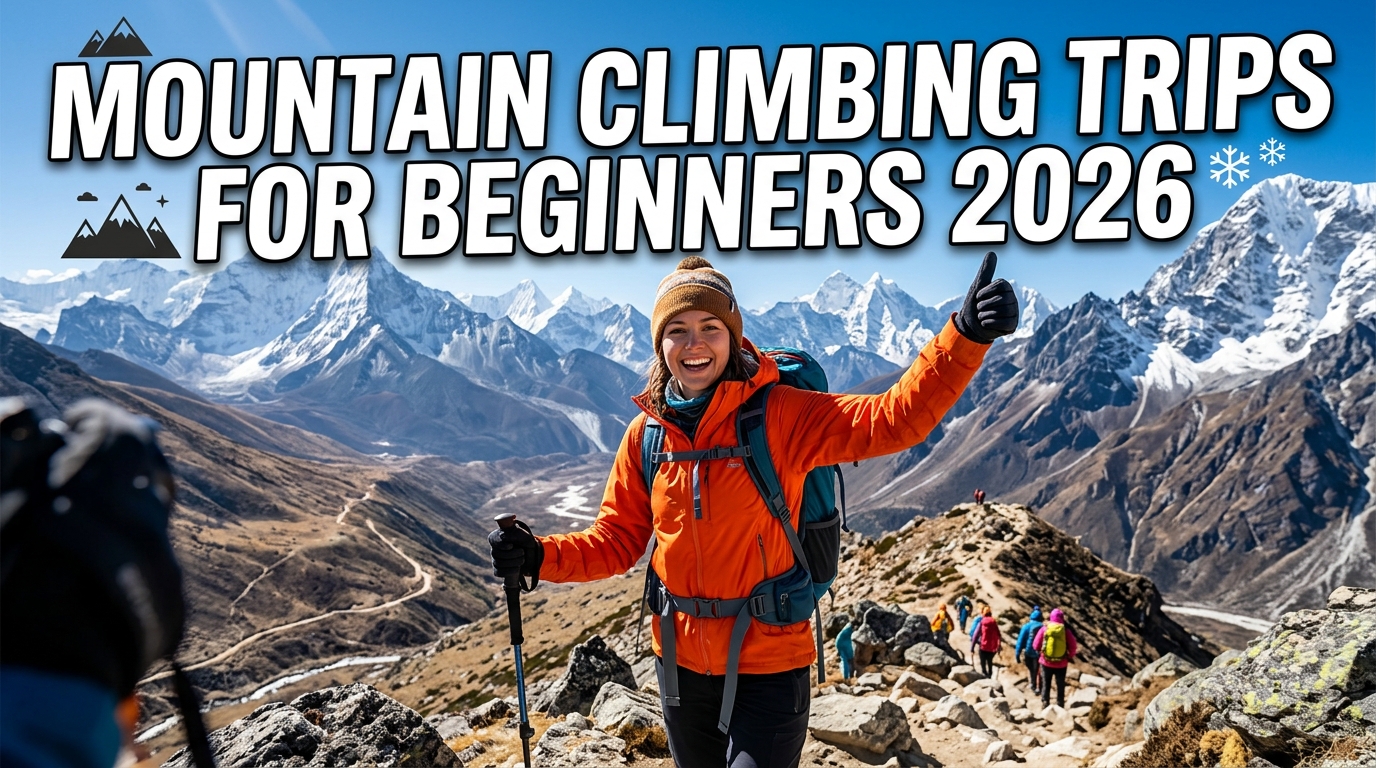
Mountain Climbing Trips for Beginners

Can a Beginner Go Mountain Climbing?
Yes, proper training is essential for success in glacier climbing. A beginner can go mountain climbing with no prior experience, as long as they choose a non-technical peak, have basic aerobic fitness, and use a certified guide. Many popular beginner peaks, like Kilimanjaro or Quandary Peak, require zero rope or technical skills.
The word “climbing” scares people. It sounds like ropes, harnesses, and sheer rock faces on a steep slope. But the truth is that most Consider beginner mountain climbing trips led by experienced mountain guides. involve walking. Long, steep, sometimes exhausting walking, but walking is a crucial part of reaching trad climbing routes. The technical stuff comes later, if you want it to, especially when discussing basic mountaineering techniques like rock skills.
The real difference between hiking and mountaineering is altitude, terrain type, and the gear you carry. A mountain like Quandary Peak in Colorado is a Class 2 walk-up. You wear boots, carry trekking poles, and follow a trail on the slope leading to the summit. No ropes needed for some beginner routes, but they are essential for trad climbing. Kilimanjaro is similar to other peaks on a climbing bucket list. It is a high-altitude trek, not a technical climb, but it can prepare you for climbing Mount Baker.
What Is the Difference Between Hiking and Mountaineering?
| Type | Terrain in the North Cascades can be challenging and requires good climbing skills. | Technical Gear is crucial for those progressing from beginner to advanced levels in mountaineering. |
|---|---|---|
| Hiking | Trails, low altitude | Boots, daypack |
| Trekking | Multi-day, moderate altitude | Trekking poles and layers are essential for navigating the Cascade mountains. |
| Mountaineering | High altitude, mixed terrain | Crampons, ice axe, ropes |
Most beginner mountain climbing trips fall somewhere between trekking and entry-level mountaineering. The Yosemite Decimal System (YDS) classifies terrain from Class 1 (trail walking) to Class 5 (technical rock climbing). Beginners should target Class 1 to Class 2 peaks as part of their climbing bucket list.

Best Mountains for First-Time Climbers
The best first mountain for your climbing bucket list depends on where you live and how much time you have. Here are strong options by region:
| Peak | Location | Difficulty increases with altitude and varies based on previous climbing experience, especially in trad climbing scenarios. |
|---|---|---|
| Quandary Peak | Colorado, USA is a great destination for those interested in climbing mountains, but Ecuador offers unique opportunities for high-altitude climbs. | Class 2 |
| Mount Whitney | California, USA | Class 1–2 routes can be a good introduction to climbing for those considering trad options. |
| Kilimanjaro | Tanzania, Africa | Non-technical trek |
| Toubkal | Morocco, Africa | Class 2 |
| Mont Blanc | French Alps, Europe | Guided beginner |
| Mount Fuji | Japan, Asia | Class 1 |
| Island Peak | Nepal, Asia, is known for its stunning mountain peaks and challenging climbing skills. | Introductory mountaineering |
Quandary Peak is probably the best starting point in the US. It sits at 14,265 feet in the Colorado Rockies, it is a Class 2 route, and you can summit and descend in a single day. No permit needed for basic mountaineering in certain areas, but always check local regulations. No technical gear required for your first trip to base camp.
Kilimanjaro is the most popular international choice for rock climbers seeking adventure. The Marangu and Lemosho routes are well-suited for beginners looking to learn the basics of climbing. Summit success rates vary by route and operator, but a well-acclimatized team on a 7-day itinerary in the Mount Baker area typically sees rates above 85%. It costs between $2,000 and $4,500 USD depending on the operator and route length.
Island Peak in Nepal’s Khumbu Valley is the next step up. It involves glacier travel and basic crampon use, but operators like Alpenglow Expeditions and RMI Expeditions run beginner-friendly guided trips with full instruction, including options for trad climbing.
Also Read: Best Solo Travel Destinations for Solo Female Travelers
Guided vs. Solo Mountain Climbing for Beginners
This is the most important decision you will make on your first trip. And the honest answer is: go guided.
Why guided climbing courses are better for beginners:
- A certified guide (IFMGA, AMGA, or BMC level) knows the route, weather patterns, and turnaround rules
- You get real-time altitude sickness monitoring
- Logistics like permits, gear, and accommodation for your alpine climbing adventure are handled.
- Your summit success rate goes up significantly when you choose routes in Ecuador known for their accessibility.
Self-guided climbing on a non-technical peak like Quandary Peak is reasonable if you are experienced with high-altitude hiking and navigation tools like Gaia GPS and SummitPost, especially for beginner mountaineers. But for international expeditions or anything above 14,000 feet, a guide is not optional for a first-timer aiming to reach the summit.
What to look for in a guide service:
- Guide certification from IFMGA, AMGA, or BMC is essential for both beginner to advanced climbers.
- Group-to-guide ratio of 4:1 or lower
- Transparent cost breakdown with no hidden fees
- Itinerary that includes proper acclimatization days
- Positive verified reviews from past clients
Operators like Alpenglow Expeditions and RMI Expeditions are well-regarded in the mountaineering community. Always verify certifications before booking.

How Much Does a Beginner Mountain Climbing Trip Cost?
Cost is where most people either overestimate or get surprised. Here is a realistic breakdown of what to expect on custom trips.
| Trip Type | Estimated Cost |
|---|---|
| Colorado 14er day trip (self-guided) | $50–$200 |
| Guided Colorado 14er trip offers a unique experience for those seeking adventure in the backcountry. | $300–$800 for mountaineering adventures. |
| Kilimanjaro guided expedition | $2,000–$4,500 |
| Island Peak guided climb (Nepal) | $1,500–$3,000 |
| Mont Blanc guided ascent is a must for anyone’s climbing bucket list. | $2,500–$5,000 |
| Introductory mountaineering course | $500–$1,500 |
Gear is a separate cost. A full beginner setup, including mountaineering boots, crampons, microspikes, hardshell jacket, layering system, and trekking poles, can run $800 to $2,000 if you buy new.
The smarter move for a first trip is to rent. Most guide services or local mountain shops rent crampons, ice axes, and boots for $20 to $60 per day. Buy the basics (layers, poles, pack) and rent the technical pieces.
What Gear Do You Need for Your First Mountain Climb?
You do not need to buy everything before your first trip to Mount Rainier National Park, especially if you plan to join a guided climbing course. Here is what actually matters:
Essential gear for beginner mountain climbing:
- Mountaineering boots or stiff trail runners (depending on peak)
- Microspikes or crampons (rent first)
- Trekking poles
- Layering system: base layer, mid layer, hardshell
- Warm hat, gloves, sun protection
- Headlamp with extra batteries is crucial for night climbs on a mountain peak.
- Hydration system (2–3 liters minimum)
- High-calorie snacks for summit day
Gear like an ice axe and full crampon kit only becomes necessary on glaciated routes, while trad gear is essential for rock climbing. For a peak like Quandary or Kilimanjaro, the list above is enough, but for Ecuadorian peaks, additional trad gear may be required.
Check AllTrails and SummitPost for gear lists specific to your chosen peak. They are consistently accurate and regularly updated.
How to Train for Mountain Climbing as a Beginner
You do not need to be an athlete to enjoy backcountry adventures. But you do need aerobic fitness and some leg strength. Here is a phased training approach that works for aspiring mountaineers to develop essential mountaineering skills, including wilderness first aid.
Weeks 1–3: Build Base Fitness
- Walk or hike 3–4 times per week
- Start with 45–60 minutes per session to build your endurance for climbing mountains.
- Focus on steady pace, not speed
Weeks 4–6: Add Elevation Gain
- Find hilly routes or use a stair machine
- Target 1,000–2,000 feet of elevation gain per hike
- Add a weighted pack (15–20 lbs) on one session per week
Weeks 7–10: Simulate Summit Conditions to enhance your mountaineering experience.
- Complete one long hike per week (5–8 miles with 2,500+ feet gain)
- Practice with your actual pack and boots
- Add one rest day between hard sessions to prepare for the seven summits challenge.
For Kilimanjaro or any peak above 12,000 feet, 10–12 weeks of this approach is ideal. For a Colorado 14er, 6–8 weeks is enough if you are already moderately active and have learned the basics of mountain climbing.
How to Avoid Altitude Sickness on Your First Climb
Altitude Mountain Sickness (AMS) Lack of preparation is the number one reason beginners fail to summit when climbing mountains. And it does not care how fit you are. It can hit anyone.
Symptoms to watch for:
- Headache (most common first sign)
- Nausea or loss of appetite can affect even the most experienced mountaineers.
- Fatigue that sleep does not fix
- Dizziness or lightheadedness can be symptoms of altitude sickness during your mountaineering adventures.
Prevention protocol:
- Ascend slowly. Follow the “climb high, sleep low” principle to enhance your alpinism experience and start learning about altitude acclimatization.
- Stay hydrated, especially when preparing for backpacking in the North Cascades. 3–4 liters of water per day at altitude
- Avoid alcohol the first 48 hours at altitude
- Consider Acetazolamide (Diamox) after consulting a travel medicine doctor
- Know your turnaround rule. If symptoms worsen, go down immediately
More serious forms include HAPE (High Altitude Pulmonary Edema) and HACE (High Altitude Cerebral Edema). Both avalanches and falls are life-threatening if ignored. Descent is the only treatment for an alpinist facing altitude sickness. No summit, including those in the national parks, is worth risking your safety.
Get travel insurance that includes helicopter evacuation before any international climb. It costs around $100–$200 for most trips and covers evacuations that can cost $10,000 or more without it.

How to Plan Your First Mountain Climbing Trip
Here is a step-by-step planning sequence that actually works for beginners preparing for big mountains:
- Choose your peak based on fitness, location, and budget
- Set a timeline: most beginners need 3–6 months to prepare
- Book a guide service Always choose guides with verified IFMGA, AMGA, or BMC certification for safety in your climbing courses.
- Start your training program for alpine climbing to prepare for your summit attempt. Immediately after booking your trip to a glaciated peak, ensure you have all necessary gear for both ice climbing and trad routes.
- Consult a travel medicine doctor Always check for altitude and vaccination advice before embarking on your climbing courses.
- Sort your gear: Buy basics, rent technical items, especially if you’re planning to attempt trad climbs.
- Check permit requirements for climbing in the North Cascades, particularly if you’re a beginner mountaineer. for your chosen peak (Kilimanjaro, Whitney, and Rainier all have permit systems)
- Get travel insurance with evacuation and trip cancellation coverage
- Research weather windows to ensure safety during your ascent of a volcano. using Mountain Forecast or Windy.com
- File your trip plan for climbing mountains. with someone at home before departure
The biggest mistake beginners make is waiting too long to book and then rushing the training. Book early. Train consistently to enhance your ice climbing abilities, particularly for trad routes that require more technical skills.
Common Mistakes Beginners Make on Mountain Climbing Trips
- Going too fast on summit day. Slow and steady wins every time at altitude.
- Skipping acclimatization days can jeopardize your chances of success in climbing Mount Baker. One extra rest day can mean the difference between summiting and turning back on your journey to the seven summits.
- Wearing cotton. Cotton holds moisture and causes rapid heat loss. Wear wool or synthetic layers to stay warm while climbing in the alpine environment.
- Not eating enough. Your body burns enormous calories at altitude, especially during snow climbing. Force yourself to eat even when you are not hungry.
- Ignoring early AMS symptoms. Headache is not just dehydration at 14,000 feet; it can also indicate the need for more acclimatization during your mountaineering adventures. Take it seriously.
- Choosing a peak that is too ambitious can hinder your ability to start learning and developing your skills. A failed Aconcagua attempt is a worse experience than a successful Quandary Peak summit.

What If You Do Not Summit?
This part does not get talked about enough. Not everyone summits on their first attempt. Weather turns can significantly affect backcountry trips. Bodies respond differently to altitude. Turnaround times get hit.
It is not failure; it is part of the mountaineering experience. It is alpine mountaineering, which often includes ice climbing and can be practiced in a climbing gym.
Experienced climbers come back from mountains without summiting all the time. The turnaround rule exists because the highest mountain will still be there, waiting for your return. Making a smart call at 500 feet from the top is better than creating an emergency for a rescue team.
Set the goal as “complete the experience well,” not just “reach the top,” to fully enjoy custom trips. Most beginners come home from a failed summit attempt and book the next one within six months.
Mountain Climbing for Corporate Groups and Travel Agents
This is an angle most people in the adventure travel space overlook. Guided mountain climbing makes an exceptional corporate retreat format, and travel agents are starting to build it into high-end itineraries.
A guided Kilimanjaro climb for a group of 8–12 corporate clients runs roughly $25,000 to $40,000 total with a reputable operator. It includes logistics, gear support, professional guides, and a structured challenge framework that works well for team-building goals.
Operators like Alpenglow Expeditions and RMI Expeditions offer private group departures for alpine climbing. For 2026, many popular itineraries, including climbing courses, are already filling up, so early inquiry matters.
If you are a travel agent building adventure packages that include ice climbing and mountaineering skills, non-technical beginner peaks are the safest entry point for clients. Kilimanjaro, Mount Toubkal, and the Colorado 14ers all have strong infrastructure and established operator networks.

Frequently Asked Questions
Can a Beginner Go Mountain Climbing With No Experience?
Yes. Many popular beginner mountain climbing trips require no technical skills. Peaks like Quandary Peak and Kilimanjaro are non-technical and suitable for fit beginners with no prior climbing experience. A certified guide and proper preparation are the key requirements for tackling alpine ice.
What Is the Easiest Mountain to Climb in the World?
Mount Fuji in Japan is widely considered one of the easiest high-profile mountains to climb. It is a well-marked Class 1 trail with huts along the route. In the US, Quandary Peak in Colorado is a strong contender as a Class 2 walk-up at 14,265 feet.
How Much Does a Beginner Mountain Climbing Trip Cost?
A guided Colorado 14er trip costs $300 to $800, making it an affordable option for those wanting to improve their mountaineering skills and rock skills in the Pacific Northwest. A Kilimanjaro expedition typically runs $2,000 to $4,500. Introductory mountaineering courses cost $500 to $1,500. Gear rental adds $20 to $60 per day for technical items like crampons and ice axes.
What Gear Do I Need for My First Mountain Climb?
The essentials are mountaineering boots, microspikes or crampons (rent these), trekking poles, a layering system including hardshell, a headlamp, and 3 liters of water capacity, especially for climbing Mount Baker. Skip buying an ice axe until you need one for your ascent of a volcano. Rent technical gear for your first trip.
How Do I Train for Mountain Climbing as a Beginner?
Start with 6 to 12 weeks of progressive hiking. Build up to long hikes with 2,500 feet of elevation gain per session and carry a weighted pack. Focus on aerobic fitness, leg endurance, and getting your boots broken in before summit day.
Is Mountain Climbing Safe for Beginners?
Yes, with the right preparation. The main risks are altitude sickness, weather changes, and poor decision-making around turnaround times are critical factors to consider in your mountaineering experience. A certified guide reduces all of these significantly. Always carry travel insurance with evacuation coverage on any international climb.
How Long Does It Take to Climb Kilimanjaro?
Most guided itineraries run 6 to 9 days on the mountain, providing a great place to learn about climbing techniques. A 7-day Lemosho route is considered the best balance of acclimatization and success rate for beginners looking to add it to their climbing bucket list, especially for those interested in glacier climbing. Shorter 5-day routes have notably lower summit success rates and are not recommended for first-timers, especially those attempting trad climbs.
Do I Need a Guide for Beginner Mountain Climbing?
For international peaks and any route above 14,000 feet, yes. A guide with IFMGA, AMGA, or BMC certification provides route knowledge, altitude sickness monitoring, and emergency protocols for alpine routes. For easier US peaks like Quandary, experienced hikers can self-guide with proper navigation tools.
What Is the Best Beginner Mountain in the US?
The best beginner mountain in the US is Quandary Peak in Colorado. It is a Class 2 walk-up at 14,265 feet, requires no technical gear, and can be completed as a day trip. Mount Whitney in California is another option, though it requires an advance permit.
Can a Beginner Climb Kilimanjaro?
Yes. Kilimanjaro is the most popular mountain for alpinists seeking to experience big mountains. beginner mountaineering expedition In the world, the North Cascades offer some of the finest terrain for aspiring rock climbers to start learning. It is a non-technical high-altitude trek, not a technical climb. The main challenge is altitude, not difficulty. A 7-day guided itinerary with proper acclimatization gives beginners a strong chance of reaching Uhuru Peak at 19,341 feet.
What Age Can You Start Mountain Climbing?
There is no strict minimum age for non-technical beginner climbs. Fit teenagers regularly complete routes like Kilimanjaro and Colorado 14ers. For climbers over 40 or 50, the main consideration is cardiovascular fitness and altitude response. Many people complete their first summit in their 50s and 60s with no issues, often on easier trad routes.

Conclusion
The gap between wanting to climb a mountain and actually doing it is mostly in your head. The logistics of reaching base camp are manageable. The training is straightforward and essential for developing mountaineering skills, especially for tackling glaciated peaks. The gear does not need to be expensive, but it should be suitable for snow and ice conditions. And the right guide service takes most of the risk off your plate when climbing mount, ensuring safety through wilderness first aid training.
Pick a peak that matches your fitness. Give yourself enough lead time to train for climbing mount. Book with a certified operator. Get the insurance.
Leave a Reply