
Local Festivals Worth Traveling For Worldwide
In a dusty square in Pushkar, Rajasthan, eyes burning, can’t see through my view finder on my camera. I had made the dreaded mistake, contact lenses in a camel fair with the desert dust storm. When I asked for something else, I got a cotton cloth as a gift from an old kind gentleman trader, who told me that the next time I would need it, I would be given a pair of glasses. That moment encapsulates what would be the other message I wanted to share here. There’s just a little bit of magic in the experience of seeing a festival on Instagram versus standing in a festival. But it’s where most travel blogs end their journey.
This is NOT a generic bucket list. I have taken my own time and money risks and made some poor choices, so you don’t have to. Some of these festivals I have been to. Some I haven’t been able to attend as I booked flights before confirmation of the date by the local council. That one stung. We shall come to that.
This is a combination of what you’ve learned from and experienced and some price ranges you have to live with and some cultural context that makes you not be the kind of tourist everyone rolls their eyes at. There’s a hundred listicles for pretty pictures, if you’re looking for them. If you’re looking to plan a trip to an event that will make you see a place differently, read on.
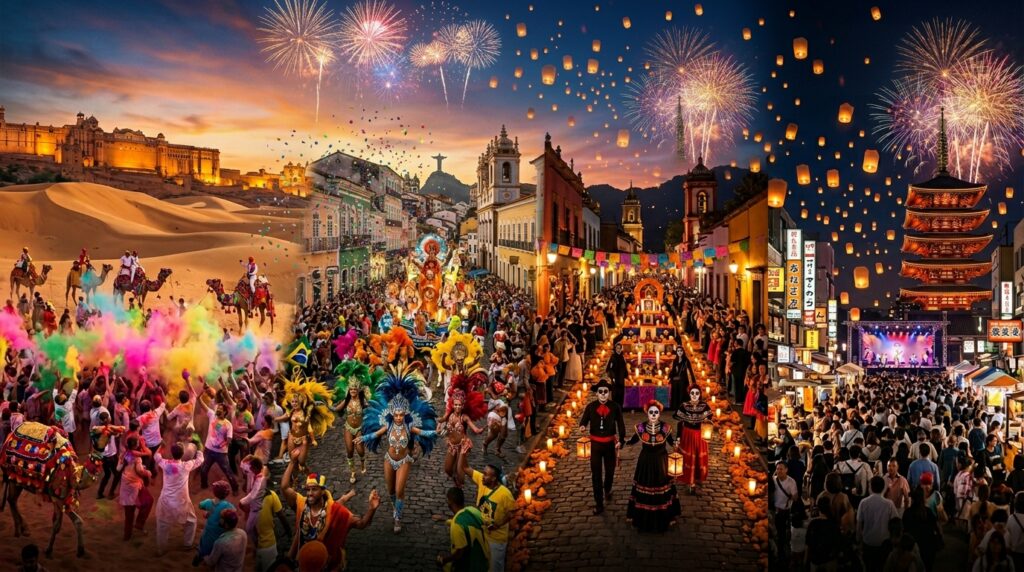
What Actually Counts as a Local Festival
A local festival is NOT a ticketed EDM stage set up in a field. A community-supported event that’s been occurring in the same town or area since time immemorial, and which is tied to a specific date. Sometimes centuries. The intended audience is the inhabitants of this place. Tourists are not primary — but often not even tolerated, sometimes welcomed with wide open arms. Despite you, the festival is here. Even if you were not there, the festival would still be here.
This is important as it alters the power relationship. As a customer, you are at a music festival. You are a guest on the spiritual real estate of another person at a patron saint fiesta in a Mexican village. That’s how it works — where you stand, what you wear, when you take photos and whether or not you belong.
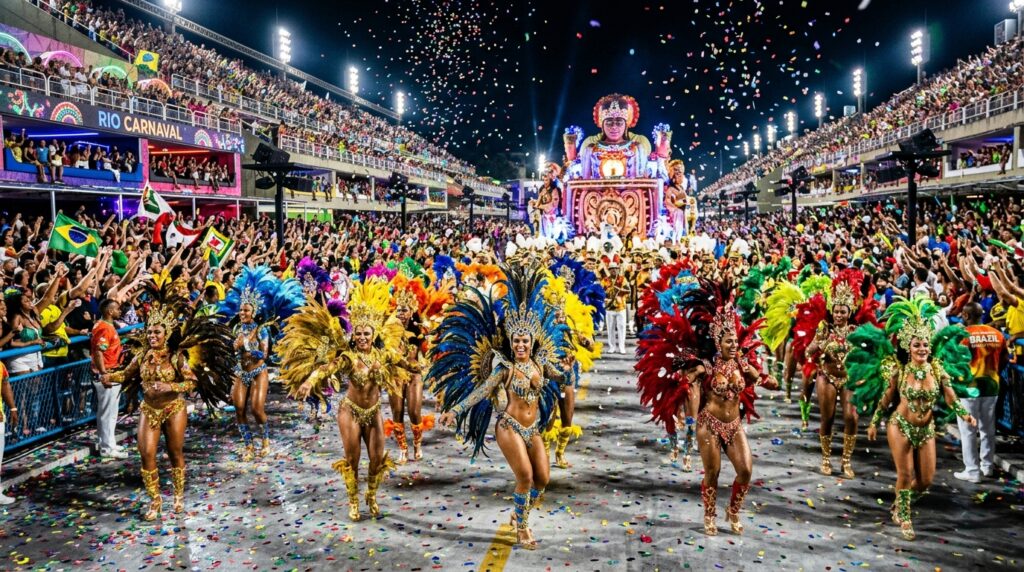
A Rio Carnival is a spectacle created to some extent for outsiders. In India a Kumbh Mela is a collective pilgrimage which will occur in the same way even if there is no foreigner present. Both are worth a trip to. However, they are different expectations that they have from you.
Also Read: Couples Dive: Scuba Diving Vacation Packages For Couples 2026
How to Pick the Right Festival for You
The majority are beginning from the wrong end of the stick. They roll out their list and scour for their best pic. For people who prefer solitude and don’t like getting their clothes stuck all over the same, that’s where you’ll find yourself when it comes to La Tomatina. Try to ask yourself three questions, first.
First, crowd tolerance. Are you able to be chest to back with strangers for hours? If not, then cross Rio Carnival and Songkran’s main strips off your list. Pay attention to local festivities such as Kurentovanje in Slovenia and Naadam in Mongolia. Still spectacular. Much more space to breathe!
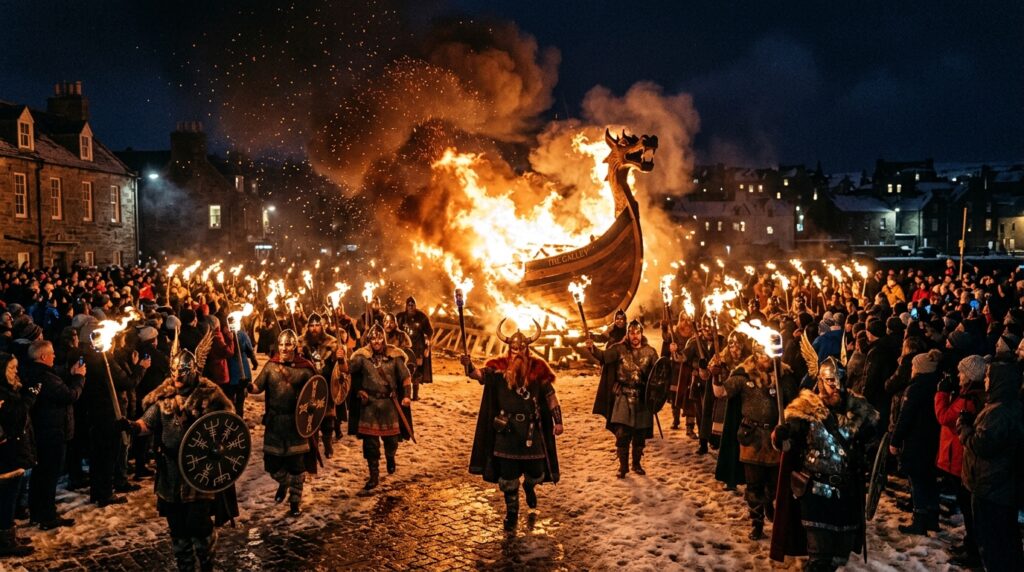
Second, participation appetite. Viewers and participants are welcome to watch and/or participate: In Shetland you see at Up Helly Aa. A Viking longship is built throughout the year by the local people. They burn it. You’re in the cold night and you watch. It is glorious. There’s no torch to be grabbed. When it comes to Songkran, in Thailand, you’re going to get wet, regardless of whether you’re in the mood or not. No opt out lane means there isn’t one.
Thirdly, an appreciation of uncertainty. There are no village festivals in Spain or harvest festivals in Ethiopia in the timetables of Swiss trains. The start time listed is a recommended time. If this is a worrisome prospect, try to attend a structured urban festival such as the Gion Matsuri Festival in Kyoto, where the route and when the festival is going to arrive is published in military fashion.
| Your Priority | Better Fit |
|---|---|
| Pure spectacle, big energy | Rio Carnival, Las Fallas |
| Spiritual depth, quiet observation | Timkat in Ethiopia, Pushkar Fair mornings |
| Controlled chaos, physical fun | La Tomatina, Songkran |
| Intimate cultural immersion | Naadam homestay, Kurentovanje |
Festivals by Region That Are Actually Worth the Flight
I will not list 50. I will name the ones where it’s worth the carbon emissions and the damage done to my bank account.
Asia
Songkran, Thailand
It’s not Bangkok, it’s Chiang Mai. Bangkok is a water fight on steroids. There is that too in Chiang Mai, but you can witness locals sprinkling jasmine water on the Buddha images in the morning when they walk to Wat Phra Singh. The heart of the ritual is that. This is the overflow of the water fight. Make a reservation in the Old City moat before January. By March, the rates are tripled. Expect to pay between $40 and $80 a night for a good room. Street food helps keep expenses down with a daily cost of $15–$25.
Gion Matsuri, Kyoto, Japan
This festival is spread throughout the month of July. The main parade, Yamaboko Junko, is on July 17th. Those floats aren’t just for show. They are all the pride of each neighborhood and they have been constructed and pulled by local families. The wheels are as high as people, so they don’t fall down. It’s engineering theater to watch the teams move those huge structures on and off, with just bamboo sticks and a bit of muscle power. July is a very humid month in Kyoto. Heatstroke is real. Bring a water bottle and small towel. Resorts close to the parade route fill up in February. Budget $150 to $300 per night. An extra charge is payable for a prime viewing seat along the way, but it is well worth the price.
Pushkar Camel Fair, Rajasthan, India
This is a market for animals first, it’s a cultural event second. It’s all business in the morning. A truce of trading camels, haggling, dust. It then gets into mustache contests, folk music around fires and the art of tying a turban by afternoon. So I talked about my contact lens thing. Listen up to the warning. The dust is very fine and will enter a sealed bag. Glasses only. Expect to stay in a comfortable guesthouse for $30 to $60 a night. November’s dates vary slightly from year to year, depending upon the lunar calendar. Before booking flights, please refer to the Rajasthan Tourism website.
Europe
La Tomatina, Buñol, Spain
It’s just as it sounds — a little hour-long tomato fight in a small Valencian town. And that’s the best time that I ever had getting pelted with overripe fruit. Some things that no one tells you:
- Squeeze the tomato before throwing. A whole tomato on the face will hurt.
- Use goggles, NOT sunglasses.
- The shoes you wear will be destroyed. Take another pair of shoes.
The town is tiny. The majority of people remain in Valencia to catch the early train. Official tickets are capped and sell out. Purchase them months in advance from the site of the Buñol town hall. The ticket and train and hostel and food were all totalled at 4 days at about $400.
Up Helly Aa, Lerwick, Shetland, Scotland
This one will be difficult to manage. Shetland is a chain of islands located north of Scotland that is swept by the wind. The festival takes place the final Tuesday of January. A thousand locals dressed in Viking costume, torch in hand, walk through Lerwick with the torches lit, and drop the torches on a replica of a longship. The fire blazes in the black winter sky. Ferries and flights are canceled when wind speeds increase. Make a booking with the understanding that you could be rejected. If you do make it, it will not be forgotten. Accommodation is scarce. Guesthouses book up a full year in advance. Budget $150 to $250 per night. The Jarl Squad is in charge of leading the way in the procession. Do not ask to join. This is their legacy, their several months of preparation. Watch, freeze and be grateful.
Kurentovanje, Ptuj, Slovenia
A pagan festival, long before Christianity, at the end of winter in the land. The Kurenti costume consists of large sheepskin jackets and cowbell and ribbon masks. The bells are heavy bells. The music is rhythmic and hypnotic. They walk around in Ptuj to ward off winter. It’s loud, peculiar and nothing like Europe’s carnival. The town of Ptuj is a tiny medieval town east of Ljubljana. If possible remain in the old town. German and Austrian visitors visit the hotels first, and well before the English-language press gets a hold of it. Budget $80 to $120 per night. February dates vary. Verify on the site of the Ptuj tourism website.
The Americas
Día de Muertos, Oaxaca, Mexico
It’s not Halloween. It’s a gathering of family both living and dead. Oaxaca City is known for the comparsas, neighbourhood parades, and candlelit vigils at the cemeteries. The nighttime scenes in the cemeteries form the central theme. Families sit around graves, eating and talking. You are an invited visitor to their grieving that has become a celebration. Request permission to take any portrait. Don’t enter the perimeter of the grave unless invited to do so. Book Oaxaca hotels up to 6 months in advance. Budget $60 to $120 per night. There is an increase in flights into Oaxaca International Airport at the end of October. Book by June.
For less intense experience, try Pátzcuaro, Michoacán. Janitzio is an island where there are candlelit canoe processions. It is more solemn. Access is harder. Oaxaca is more sociable. Pátzcuaro is more reflective. Select depending on the mood.
Albuquerque International Balloon Fiesta, New Mexico, USA
Early October. Cold desert mornings. Hundreds of hot air balloons inflate and float as one. It sounds cheesy. It is not. Watching silent giants take to the air on a field at the dawn of day, with the mountains catching the first light is very moving. Best part is the Dawn Patrol — a couple of balloons ascend before dawn to check the wind. Glow events are crowded at night, but still fun! The primary annoyance is traffic. Take the park and ride shuttles. Self-driving is a wrong choice. There are a lot of hotels in Albuquerque, but during Fiesta the rates are doubled. Budget $150 to $250 per night. Book by April.
Fiesta de la Virgen de la Candelaria, Puno, Peru
This occurs on the shores of Lake Titicaca at the beginning of February. The altitude of Puno is 3,800 m. Altitude sickness isn’t something to be taken lightly. I saw a traveller fall in the Diablada dance procession. She recovered, but missed two days. Fly to Cusco, spend 48 hours acclimatising in Cusco and then bus to Puno. The Diablada costumes are astounding. Hand embroidered, up to 20kg in weight, demon masks and detailed beadwork. These are treasured items that have been carried on from generation to generation. The parade will be on-going throughout the day. Budget accommodation costs between $25–$50 per night. Along the main avenue is the best place to view. Arrive early.
Africa & The Middle East
Timkat, Ethiopia
Ethiopian Epiphany. Celebrates the Baptism of Christ. The main event is held at Fasilides’ Bath, a stone pool filled with water, in Gondar. Priests walk with the copy of the Ark of the Covenant wrapped in velvet. They begin singing before dawn. People are wearing white traditional cloth netela. Some of the pilgrims jump into the water after blessing it, in order to renew their vows. Gondar is more picturesque. Lalibela, with its rock-hewn churches, is more spiritually intense. Both are extraordinary. January dates are set. Budget $40 to $80 per night. Ethiopian Airlines flies via Addis Ababa.
Festival of the Sahara, Douz, Tunisia
A town through which one passes into the Sahara, Douz. Nomadic tribes meet for poetry recitals, camel races and dog hunts with Sloughi every December. Sloughi is a North African greyhound that is fast and elegant. One of the few remaining glimpses of Bedouin hunting tradition is the view of them working the edge of the desert. The festival is small scale, nothing so big. The tourist infrastructure is very basic. Budget $50 to $100 per night. Research the region’s political climate before travel around the Algerian/Libyan borders, via your Embassy. Most nationalities have an easy visa application process.
The Planning Workflow Nobody Gives You
This is the segment where I save you from the most costly mistake that I made. Once I had booked a ticket for the Apennines village festival 6 months in advance. The dates I found are from the previous year’s blog. The local council moved the festival forward two weeks. When I got to the town square there was no one there. The festival was on. I missed it.
Here is the workflow I use now:
- Recognize the festival and the area in which it is celebrated.
- Look for the website for your town or city. Try to find a site that has the “.gov” or the regional domain suffix. Towns in Spain have their domains as .es. The Japanese cities have .lg.jp.
- Locate the ‘Fiestas’ or ‘Eventos’ or annual calendar page. If necessary, translate it. Look for a PDF poster with this year’s date. That poster is on the money.
- Compare the geo-tagged posts on Instagram from the latest year. Search the location, scroll to last year’s date and check to see if the activity is matching.
- When the date is confirmed, book flights.
- Book accommodation next. In village festivals, direct booking with a local guesthouse or the homestay network is better than OTAs. There are a lot of family run establishments that don’t even have a website that will show up on Booking.com.
- Schedule a calendar reminder to re-confirm the date of travel 60 days prior to travel. Occasionally municipalities may change dates late.
If you are staying as a homestay in a remote location such as the Mongolian steppe during Naadam or the Peruvian altiplano during Candelaria, you’ll need to book from a local tourism operator that has a license from the national tourism authority. Email them. Discuss whether they make family vacation arrangements. Make a bank transfer deposit. This is not ideal if you’re accustomed to booking confirmation emails. It works. It also helps to ensure that your money is spent in the local economy.
Cultural Etiquette That Actually Matters
General tips such as “be respectful” are of no use. There are certain things I’ve learned, though perhaps a bit embarrassing.
Photography at religious festivals: There are no restrictions for the Timkat festival. Avoid placing a lens in a pilgrim’s eye while he is in prayer. When taking pictures at Día de Muertos, ask permission before taking pictures of anyone in a cemetery. Say “Permiso” and gesture to your camera. If they hesitate, gently set down the camera and smile. Now is not the time to break someone’s heart with the picture.
Dress codes: For most Asian and African religious activities, the minimum for women is to cover their shoulders and knees. In Ethiopia a white netela scarf is suitable and is sold everywhere. Renting a yukata is a visual and effortless way of integrating into the image of Gion Matsuri in Japan.
Drones: Don’t bring a drone. They are usually totally prohibited at most local festivals. Though they don’t, the buzzing is annoying and repulsive. I watched a drone pilot being taken out of a Slovenian village by an unimpressed local council member. The video was not worth the time.
Sacred spaces:
- Giving water to monks and elderly people is not allowed at Songkran.
- Do not enter into the holy bathing area of Kumbh Mela, which is reserved for sadhus.
- The ghats of the holy lake at Pushkar demand to be walked on barefoot and cannot be photographed.
Cash economies: Village festivals often have no card terminals. Bring small bills of local currency that are clean and in good condition. One of the most eco-friendly transactions in travel is to purchase a handmade textile from the artisan, in cash.
Health and Safety You Will Not Find in Guidebooks
Altitude: Acclimatization is recommended in Puno (3,800m), at Ladakh festivals in Leh (3,500m) and the Ethiopian highland towns (2,500m+). 2 nights at an intermediate level. If taken, Diamox will help. It is worse when consumed with alcohol. Dehydration is a symptom of altitude sickness. Drink water obsessively.
Crowd crush: Rio’s Sambadrome is organized and has tickets, so it’s not that bad. The free street parties (blocos) are packed. Store valuables in a concealed belt. During the Kumbh Mela, the numbers of people in the vicinity of holy bathing times grow. Don’t go during rush hour, go in the early morning.
Dust and respiratory issues: Pushkar, the Sahara Festival, and Naadam on the Mongolian steppe are all related to fine dust. A buff or scarf over the mouth is helpful. Take note, contact lens wearers. Switch to glasses. Take extra prescription medicine drops.
Food and water: Street food is a part of the festival experience. Avoid eating at the end of the line, but eat where the line is the longest. The only good indicator of freshness is the crowd. Take oral rehydration salts (ORS). Festival days are hot, long and dry.
Insurance: Festival cancellations or sickness before a festival — regular travel insurance will not cover this. Cancel-for-any-reason policies exist. They are more expensive (typically 10–15 per cent more) and are not sold if you don’t pay for your first trip within 14 days of paying. I think it is worth it to travel for a $3,000 long haul festival.
What This Costs, Roughly
I don’t like budget generalities. These are actual price ranges for a one-week holiday with flights from one of the North American or European hubs, hotel, food and festival passes.
| Festival Tier | Example | Cost Range (1 Week) |
|---|---|---|
| Budget | Pushkar, Candelaria, Douz | $500–$1,200 |
| Mid-Range | Kurentovanje, Oaxaca Día de Muertos, Timkat | $1,200–$2,500 |
| Premium | Gion Matsuri, Rio Carnival, Up Helly Aa | $2,500–$6,000+ |
The longer the lead time, the lower the cost. Normal rates are guaranteed 6–8 months ahead. Three months away, pay a premium or stay 45 minutes from the action. If you’re planning on staying in the heart of the action, begin making reservations nine months in advance for top-notch festivals.
B2B Angle: What the Travel Trade Gets Wrong
Just occasionally I work with tour companies or DMOs. I see a pattern of treating local festivals as products to be packaged and offered instead of living traditions which should be supported. The economic success of the festivals depends on the respect of the tourism layer to the community layer.
The gold standard is small group tours that have local heritage interpreters, are booked in family run guesthouses and educate their clients on etiquette before they arrive. Drop 50 people into a village festival without any cultural prep and friction. The people of the community feel they are zoo animals. The traveller is lost in the meaning.
Festival calendars that are produced by DMOs with the municipal links, lead-times and etiquette guidelines benefit the traveler and the community. The ones that exclusively post pictures of posh days push overtourism to not prepared towns. It is not only a good opportunity to build a system of festival tourism infrastructure in secondary cities and rural areas to alleviate overcrowding in hot spots, but also a great opportunity to create more workplaces through it.
Frequently Asked Questions
Which Festival Gives the Best Return on Investment for a Two-Week Trip?
Valencia is the city of Las Fallas in Spain, a combination of huge sculptures, fireworks, street parties and good transport. In one trip you get a world-class show and a vacation on the coast. The dates for March are set. Book by October.
How Do I Find Hyper-Local Festivals Not on Tourist Websites?
Refer to Wikipedia’s “List of festivals in [Country]” page. Filter by town size. Next look the town hall website. The annual festival posters are posted as PDFs on small municipalities’ websites. Match with geo-located Instagram posts from last year. It has taken me to a party of chestnuts in Tuscany and to a fire walking ceremony in rural Japan that was completely untranslatable into English!
Are Local Festivals Safe for Solo Female Travelers?
There are many, but it depends on the context. Statistically speaking, Japanese matsuri and Bhutanese tshechu are very safe. European carnivals involve a lot of drinking and require extra situational awareness at night time. I endorse a small group tour for events in an unfamiliar location at night. The safety aspect is seldom related to the festival itself. It’s around the nighttime behaviour of the street.
Is It Ethical to Attend Religious Festivals If I Am Not a Believer?
Yes, if the festival is to be conducted in public space, and the community is accepting outsiders. You are a silent witness at sacred times. Avoid following rituals that you do not know. Avoid accepting communion, entering the restricted parts of the shrine and bathing in the waters of the holy baths that are used for the faithful. It is not a common courtesy to be curious and restrained to be disruptive.
How Far in Advance Should I Book Flights for a Major Festival?
Six to eight months for high level events such as Gion Matsuri or Rio Carnival. Mid-range regional festivals: 3–5 months. In the case of festivals in remote villages, make sure of the municipal date and book promptly. Chances of wasting a flight are greatest if you book too early on an unconfirmed date.
What Is the Biggest Mistake First-Time Festival Travelers Make?
Arriving at the beginning of the festival. The pre-event rituals, community preparation and build-up of energy are lost by then. Arrive 48 hours early. Stroll the track ahead of the crowds. Discover where the natives dine. That buffer makes things feel real — not “check this box” but “This is the real thing.”
Do I Need a Local Guide, or Can I Figure It Out Alone?
If the festival is organized in a structured format, such as the Balloon Fiesta in Albuquerque, or Las Fallas, then solo is okay. A local fixer or small group tour will be invaluable on an out-of-town cultural festival, such as Timkat in the Ethiopian highlands or Naadam in the Mongolian steppe. They are responsible for transport, translation and cultural mediation. A local guide for which you can expect to pay $80 to $200 daily will be qualified.
The Departure Checklist
- Choose a festival depending on how much crowd you can take and how much festival participation you have.
- Check the date on the city’s website.
- Only book flights once confirmed.
- As far as possible, get lodging from a local provider.
- Follow cultural etiquette, not only the photo spots.
- Prepare for the particular physical challenges: dust, altitude, cold or hot.
- Check in 2 days prior.
- Carry cash.
- Please leave the drone at home.