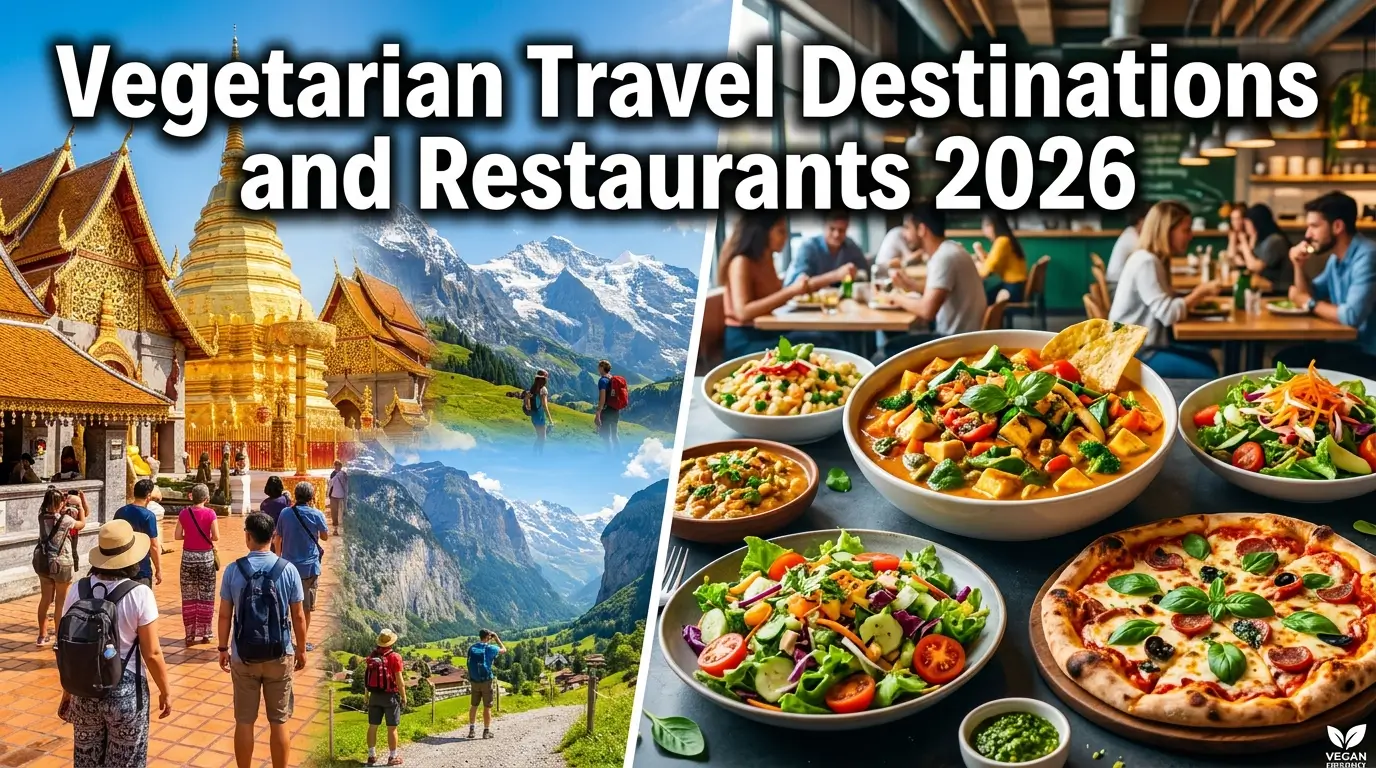
Vegetarian Travel Destinations and Restaurants
I recall that I was sitting on a plastic stool in the town of Chiang Mai, knees on the table and I was eating a bowl of khao soi jay for 40 baht. On the other side of me, there was a traveler from Germany, who was near crying out of his or her distress. She had been eating plain rice and sliced cucumbers for three days as she didn’t know where to get the food I was eating. She had the apps. She had been reading the blogs. No one had explained how anything of this was achieved on the ground.
This discussion has come up, in various forms, in Mexico City, in Berlin and in Addis Ababa. The information exists. The frameworks don’t. This is the article I wish I would have received when I was first going on a vegetarian adventure 15 years ago.
The Difference Between a Good Destination and the Right One
Vegetarian city lists abound! Most of them are of no use. Not because the cities are bad but because the lists don’t ask the question of who you are as a traveller. Both London and Chiang Mai are vegetarian mecca. There is no two pairs that are more dissimilar as far as how you are using them are concerned.
A great vegetarian spot is one that is able to provide places to eat. The right destination is a place that is in line with your travel preferences. Whether it’s the number of vegan cafes it introduces, or the general chaos, Zurich isn’t the place to be if you’re looking for street food. Delhi’s sensory overload won’t feel like a culinary adventure, if you’re looking for structure and predictability. This will seem like a challenge.
I’m not going to go into the individual cities, but here is the filter I use. Ask yourself three questions:
- First, do you prefer eating at street markets and eating out or do you prefer to reserve a table in a restaurant?
- Second, do you like to deal with language barriers or are you exhausted by them?
- Third, are you traveling alone, with a partner or with a group of people that eat meat?
Your responses will show you new, different directions.
Destinations Built on Centuries of Vegetarian Culture
In some areas, it was not possible to adapt to vegetarians. The people who were vegetarians made the area their own. The food isn’t a special menu, as it’s part of their religious and cultural practices in these places. It’s the default menu.
Chiang Mai, Thailand
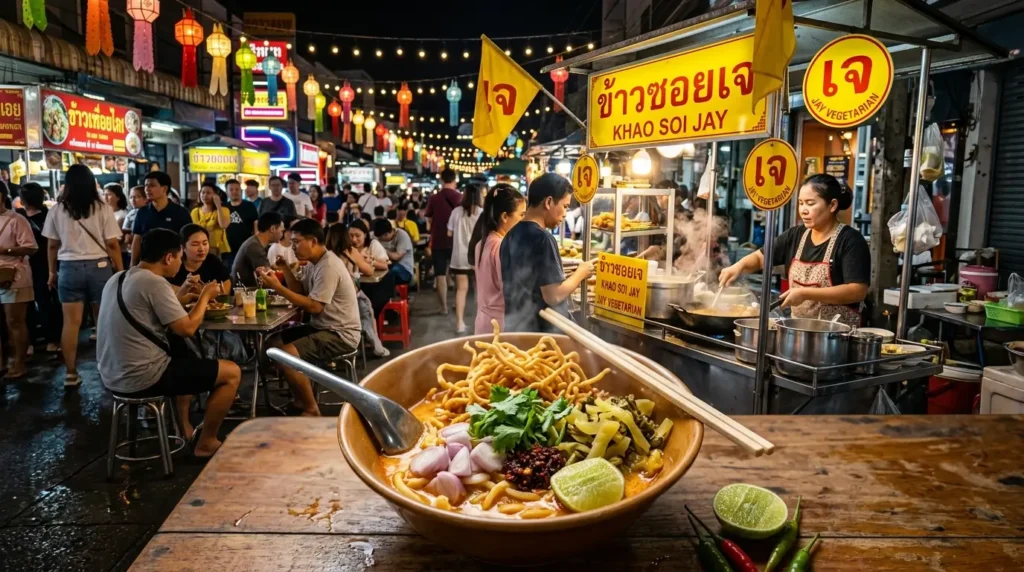
The term jay food is not only related to the avoidance of meat in Thailand. It is a whole culinary style, and an ingredient, technique and flavor style all in one. A jay restaurant does not provide a mere copy of a meat-based restaurant. It offers food created to be a vegetarian from the get-go.
There are tons of restaurants in the Old City that have yellow-jay signs, but it’s the nighttime markets that are the action. There’s a khao soi jay vendor in the South Gate market who sells a better khao soi than any meat khao soi. Creamy coconut broth, crispy noodles on top, punch of lime and chilli. You pay pocket change and eat among the locals, regardless of whether or not they are vegetarian. This is what a true food culture is. It’s not a vegetarian option! It’s just food.
What you’re actually eating: Khao soi jay, pad pak boong (morning glory stir-fried with garlic and chili) and som tam jay (green papaya salad without fish sauce; no shrimp paste is to be implied).
Food prices:
| Option | Price |
|---|---|
| Street food per item | $1.50 to $3.00 |
| Jay restaurant meal (e.g. Pun Pun) | $5 to $8 |
| Half-day cooking school | $25 to $35 |
Udaipur, India
Wedding season was on when I was in Udaipur and one of my neighbours who was staying at a rooftop restaurant suggested me a thali. This is the condition in India. Food is communal and makes the journey of a vegetarian traveler not so lonely.
The Rajasthani vegetarian tradition is not only aged. It’s specific. Jain vegetarianism was able to give rise to cooking without touching onions, garlic, potatoes or carrots since it forbids consumption of root vegetables because they are believed to kill the organisms in the soil. What remains after the restrictions is incredible and that’s the cuisine that has been created. When no rules are being adhered to, Gatte ki sabzi is a chickpea flour dumpling in yogurt gravy with more flavour.
What you eat: A complete Rajasthani thali (you get dal baati churma, gatte ki sabzi, ker sangri, and a dozen other dishes that would be hard to describe, but you’ll remember), kachori from a street vendor and pyaaz kachori if you like onions.
Warning: Note that, vegetarianism does not necessarily imply vegetarianism in India, it could mean no meat or include ghee, dairy and sometimes eggs. If you’re vegan, then you need to state “no dairy, no ghee, no paneer.” Don’t say vegan, you mean. The translation of words is not always possible. Say the ingredients.
Also Read: Local Festivals Worth Traveling For Worldwide 2026
Addis Ababa, Ethiopia
Ethiopia is not a word that is often mentioned in the vegetarian travelling world. It must be on any list at the top. The Ethiopian Orthodox Church is one of those churches in which fasting takes place for more than 200 days of the year. In these fasts, the diet is basically vegetarian. No meat, no dairy, no eggs!
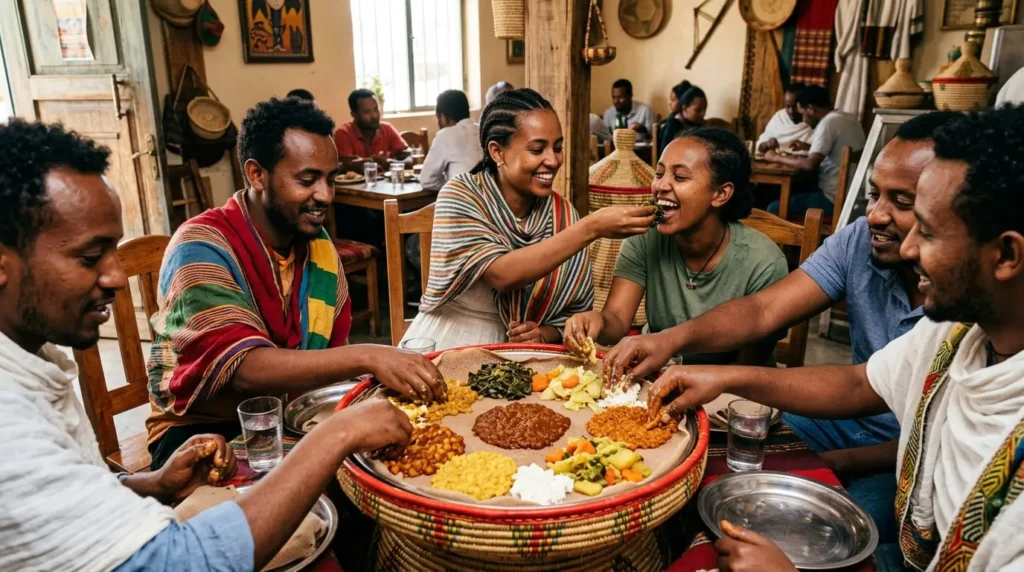
So, whether you’re eating at the nicest restaurant or the hole in the wall, every restaurant knows how to cook a total plant-based meal. Fasting platter is a flat bread called injera, which is a spongy sourdough bread and topping it with lots of shiro wat (spiced chickpea stew), miser wat (red lentils cooked with berbere spice), gomen (collard greens) and atakilt wat (cabbage, carrots and potatoes).
Eat using your hands. You break off a piece of injera and scoop. There is food sharing. It’s messy. It’s one of the best meals that I have ever had anywhere and only about $3 to $5 at a local eatery.
Cities Where the Modern Scene Drives Everything
The countries don’t impose vegetarian tradition for centuries. What they have is a lot of innovation, a lot of skill from the chefs and a lot of demand from the consumers and that has led to something completely new.
London, United Kingdom
London is the world’s vegan capital with a higher number of vegan restaurants than anywhere else. Well, that is the statistics made use of a great deal, but when it comes to the ground, it means that you could go to a different fully vegetarian restaurant each day for a month and never have to go to the same one again. That density alters your way of travelling. Do not have to make plans. You can wander.
There are excellent tasting menus at higher-end restaurants, but the city’s best is with the food, as in Gauthier Soho’s plant-based menu, which can compete with other Parisian restaurants. The middle is the strongest. The pubs that really make a good Sunday roast, with mushroom wellington. The quick eats, such as Veggie Pret, on every corner. Fish and chip shops that don’t serve fish. London took vegetarian food from the realm of the exotic and made it the everyday staple of an ordinary day.
Neighborhood cheat sheet:
| Neighborhood | Best For |
|---|---|
| Soho | Upscale and variety |
| Shoreditch | Trendy cafes, vegan breakfasts |
| Hackney | Pub scene |
| Borough Market | Grazing |
Price anchor:
| Option | Price |
|---|---|
| Pub meal | £12 to £18 |
| Fine dining tasting menu | £80 to £150 |
| Boots meal deal | £4.50 |
Berlin, Germany
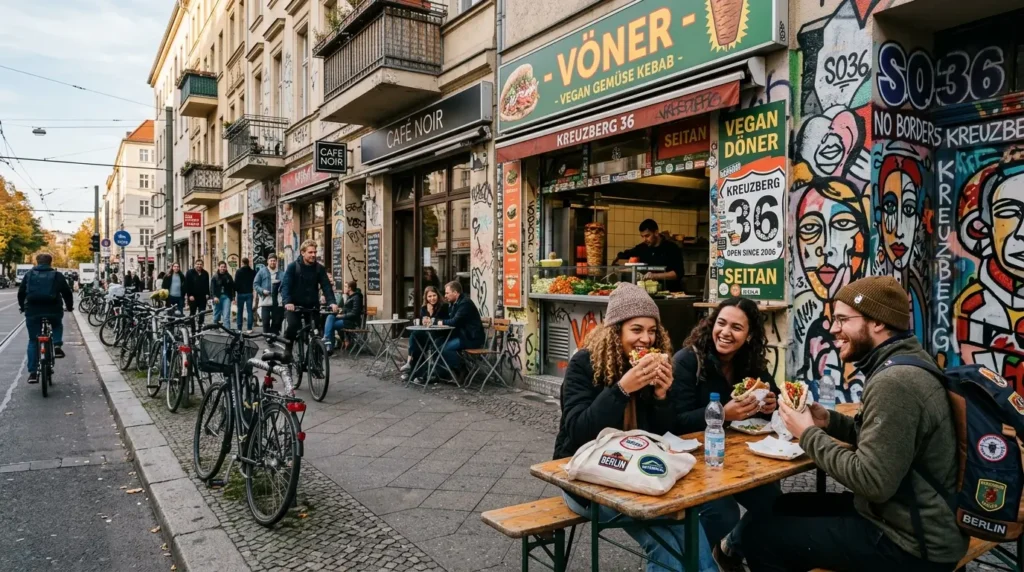
But Berlin has won the vegan capital of Europe award not by the quality of its cuisine, but its countercultural reputation. Vegetarianism has developed out of anarchist collectives, punk squats, and distrust of industrial food systems in the city. This means a city where a vegan doner kebab is priced at €5 and better flavoured than the meat original.
The center of the epicenter is Kreuzberg. In less than 20 minutes, you can stroll between Vöner (the original vegan doner shop), 1990 Vegan Living (the small plates place of a Vietnamese origin) and Brammibal’s (the vegan donuts line up at). There’s no better place to have brunch than Prenzlauer Berg. The experimental kitchens are located in Neukölln.
Another advantage that Berlin has over many cities is vegan supermarkets. Veganz started here. From vegan cheese to jerky, you can find it all without having to read any one ingredient label. If you’ve been fatigued with label scrutiny, then that’s a breath of relief for you.
What to actually eat:
- Vegan doner kebab
- Currywurst from a vegan Imbiss
- Buffet at Secret Garden (pay by weight, all vegan sushi and dim sum)
Price anchor:
| Option | Price |
|---|---|
| Doner kebab | €5 to €7 |
| Mid-range dinner with a drink | €15 to €22 |
| Café Morgenrot breakfast buffet | Pay-what-you-can |
Mexico City, Mexico
I told my friend who was a vegetarian that he would love Mexico City 5 years ago. She regarded me as if I had proposed a barbeque battle. The reputation was, all carnitas and barbacoa. That’s now over and done with.
Over the past decade, a string of chefs, several of whom have been educated in classic Mexican street cooking, have been building up the Mexican street food vocabulary, using plants. At the taco stands in Roma Norte, they cook al pastor with marinated oyster mushrooms, just like the spit-roasted ones. In Condesa, quesadillas are made with cheeses that melt well that are based on nuts. Chicharrón is made of wheat gluten and fried until crisp.
It’s not just a fad, it has a name (cocina vegetal mexicana) and it’s a movement. It’s a complete language of the culinary arts. The best meal I’ve ever had was at Los Loosers, which serves a menudo (traditionally, tripe stew), with all the mushrooms and hominy. The flavor was reminiscent of days of simmering. It had.
What to actually eat:
- Mushroom al pastor tacos
- Hibiscus flower tinga
- Squash blossom quesadillas
- Churros from Churrería El Moro (vegan by accident)
Price anchor:
| Option | Price |
|---|---|
| Street tacos | $1 to $3 each |
| Sit-down vegetarian restaurant | $8 to $15 |
| Tasting menu (e.g. Los Danzantes) | $40 to $80 |
How to Find the Right Restaurant in Any City
I’ve tried all the methods! Here’s what works.
The Apps Are a Starting Point, Not the Answer
There’s no doubt, HappyCow is the first place to visit. More than 180,000 vegetarian and vegan-friendly restaurants from around the world are listed in the app. It’s essential infrastructure. However, it has one big problem that no one mentions: listings are self-published and they’re frequently a year or more old. It’s a risk to open a restaurant that’s been around for five years and has a 3-year-old menu photo.
I first use HappyCow for orientation and then immediately cross reference with Google Maps. When you see a restaurant with 200+ Google reviews that are all above 4.5 stars and the restaurant is bustling with activity shown on its recent photos, it is likely to be real. If it’s found on HappyCow, but it doesn’t exist on Google, I don’t bother.
Abillion is younger and more social. Users write and add pictures about the dish at the review level. Some people find the app to be preachy because of its sustainability rating system. It’s helpful for product discovery, particularly if I want to check if a local supermarket chain carries a certain product like vegan yoghurt or cheese.
The Culinary Anchor Method
After too many sleepless nights while I was aimlessly wandering around, running hungry and flipping through apps. It’s really simple.
Prior to reaching a city, make sure to locate one restaurant that is 100% vegetarian, dependable, and popular. Make sure to book for your first meal! Not the first lunch! Dinner is when bad planning becomes a bad night.
If you’re there, fuel up appropriately. Then, ask the server: “Where do you eat on your day off?”
This question has three purposes:
- It flatters them.
- It will tell you that you’re not a tourist, you’re not looking for tourist food.
- And it opens a door to the restaurant network in all cities. Servers and cooks are aware of those doing well on their tasks. They are familiar with the new bistro offering vegetarian tasting menu at the off menu. They are aware of the bakery that makes a vegetarian croissant which sells out by 10 AM.
For every positive recommendation, one good restaurant will trigger another 3 to 5 genuine recommendations. You now have a food plan based on local resources, rather than an algorithm.
Instagram Geo-Tag Search
Using Instagram the wrong way is through the search bar. Here’s the correct way: open the map, zoom in to your neighborhood, and tap a geo-tag. All posts with a restaurant in their walking distance tag will be displayed. Look for dishes. Find the plates with food that seem appealing. Next, look for tags and place names in the captions.
This method brings to the surface spots that haven’t been added to HappyCow. Tiny spots. New openings. Their market stalls are only set up on the weekend. A pierogi shop in Warsaw serving lentil and smoked tofu dumplings was my favorite meal; it was found on an Instagram geo tag. There were a total of 7 posts. No one has ever given a 0-star rating to any app. Had been open for three weeks.
Ordering Food When You Don’t Speak the Language
One can’t simply say “I am vegetarian.” It is not effective to say “I am vegetarian” in most countries. The idea seems too ethereal. It has various meanings in various locations. Vegetarianism in Japan may not contain fish, but it does contain bonito flakes which form the basis of almost everything, the dashi. Thailand’s vegetarian doesn’t necessarily mean that fish sauce and shrimp paste are prohibited. I have been given chicken in France, because it’s not meat, it’s poultry.
The solution is to not say what you are and say what your ingredients are. The sentence: “I don’t eat meat, fish, chicken stock, or shrimp paste” can be answered with either a yes or a no. It’s concrete. It’s testable.
I have a note on my cellphone that’s written in the local language that has these particular phrases. Not “I am vegetarian.” That is met with blank nods. Rather, “No meat, fish, seafood, chicken stock, fish sauce, shrimp paste, but eggs and dairy are fine. May I have this meal?” Then a thank you, because politeness costs nothing and more doors open than an app.
The camera application is used for scanning the menu in Google Translate. Hold it over a menu, and see text convert to English on the screen. It’s not perfect. It will turn poem names of food into garbled gibberish. However, it will definitely get the words “pork” and “fish sauce” and “chicken stock.” The purpose of that is to do just that.
What Travel Professionals Need to Know
I have interacted with tour companies that want to provide vegetarian tours, but are unsure how to assess their suppliers. The issue which they all ran into: a hotel advertises that they will take vegetarians and start serving plain pasta 3 nights in a row. The accommodation is not the same as the plan.
My qualification question is: “Can you send me your vegetarian menu for the last 7 days?” Not a promise. Not a policy. The actual menu. They can create it if they can do it before. When they don’t know what they’re doing, they’re doing it by the seat of their pants, and your clients are the guinea pigs.
In the planning of the tours, the countries that generate the least complaints are the ones in which vegetarianism is not offered as a product; those that are not offered are the ones that are part of the culture. If an individual is a client at the Chiang Mai or Addis Ababa location, the client will be covered as part of the default food system. Those arrangements are necessary, and they must be in writing with definite menu plans, for a client in a rural area of Argentina.
There’s an Abillion app for B2B, which some operators use to hire product suppliers and vetted restaurants. If you are creating a vegetarian tour product, you should definitely give it a look. The Vegan Society trademark is recognised in 60+ countries and acts as a rapid visual trust symbol when reserving a room.
Seven Mistakes That Keep Happening
- Only using HappyCow. The app is a directory application. It’s not a curator. The listing does not constitute an endorsement. Check Google Maps reviews and recency before investing.
- Not arranging for appropriate transportation on transit days. In most countries, vegetarians consider airports, train stations and highway rest stops to be food deserts. Bring a protein rich emergency snack. Lentil salad, protein bars, or trail mix. Think that you will find nothing, and then you find something and you are pleased.
- Eating a side order rather than a full course meal. Some steamed vegetables, fries, and a side salad is NOT a meal. It’s an upset stomach and a low blood sugar reading! Search for a plant protein based meal, a legume meal, a grain based meal. Create a plate, not a pile.
- Use of the word “vegetarian” rather than ingredients. It has cultural connotations. The ingredients don’t. Use the translation of “no meat, no fish, no shrimp paste, no chicken powder” instead.
- Relying on the term “vegetable” on a restaurant’s menu. In most parts of Southeast Asia, the “vegetable soup” is prepared using pork broth. Oyster sauce is a part of the “vegetable stir-fry.” Ask about the base. Check if there is a sauce with it. Every time.
- Consuming only vegetarian meals. If you make a reservation 48 hours in advance, you will miss out on the Michelin starred kitchen that will serve a stunning plant-based tasting menu. You miss the neighborhood bistro in which the chef gets excited about vegetables. Pure vegetarian spots are not the only places that are doing good work.
- Failing to have an extra meal prepared on long flights. When the catering loads shift, the first thing that is cut is the vegetarian meal service. Even if it’s proven, it may be a sad fruit plate. Bring food. Something substantial. You’ll be glad you did, when you’re over the Atlantic at 2 AM.
Frequently Asked Questions
Which Country Has the Best Vegetarian Food Overall?
India has the longest and richest vegetarian history and diversity. However “best” means different things for different people. In Thailand, street food is served. The UK is the place to go for the fine dining innovation. For a complete surprise, Ethiopia. No one answer is right for all travellers.
What’s the Hardest Country for Vegetarians?
The two places with whom I hear the most complaints are Japan and rural France. Dashi (bonito stock) is used in virtually all Japanese dishes and the Japanese culture of vegetarianism is not popular. In French rural regions, even ordering a vegetarian dish is a personal insult to the chef as the culinary culture goes hand in hand with meat and dairy. They are both easily traversed if prepared. Neither is easy.
Is Vegetarian Travel More Expensive?
Not inherently. The world’s poorest countries are also the most vegetarian friendly — India and Ethiopia are examples. The price difference becomes evident in cultures where it is a commercial niche and not a default culture. London and New York offer affordable vegetarian fare, and tasty menus for high prices. Price point is set by you.
How Do I Handle Group Trips Where I’m the Only Vegetarian?
Don’t allow the group to make all decisions as a “committee.” There you are, at a steakhouse! Select 1 or 2 restaurants beforehand and state them with “I found this amazing place.” People follow enthusiasm. They resist complaints. Talk about a discovery rather than a restriction when you make a decision.
Can I Trust Street Food as a Vegetarian?
Yes, in countries where there is high turnover and cooking is visible. If a stall is cooking food in front of you, and there is a line of people waiting at the stall, in general, it is safe. There is no harm in the street. It is the ready food that is at room temperature. Watch the cooking. If you watch them toss in the fish sauce in the wok, you’ll know to ask the next time.
What Do I Do If I Accidentally Eat Meat After Years of Not Eating It?
It happens. Physical response may be nonexistent or it may be severe digestive upset. The emotional response is typically more severe. The guilt. The frustration. The experience of failure. It passes. It takes time to make intentions and one meal will not undo years of intention. Drink water. Move on. Don’t be afraid of this moment, take off and travel.
Is the Vegan Trademark Label Trustworthy?
Yes, with context. The Vegan Society’s trademark must ensure that the product contains no animal ingredients and is not tested on animals. Many small producers making fully vegan products, however, will not have a trademark as it requires monetary payments. Don’t use the lack of trademark as a negative indicator, use the presence of the trademark instead.
The Framework That Replaces Panic With a Plan
Here is the short version of all of the above:
- Choose your destination wisely according to your travel persona and not solely based on the number of restaurants.
- Make one night at an anchor restaurant your first.
- Apply the Culinary Anchor Method to identify the next 3 meals.
- Don’t translate your identity, translate ingredients.
- Pack backup food.
- Match the apps with the latest Google Maps activity.